Rubber washing, drying and polishing: three operations in one machine
Mould release, oil and flash dust on rubber parts are washed, rinsed, hot-air dried and coated with silicone polish in a single basket. We cover water consumption, dosing pumps, pH control, stainless steel selection and choosing the right YKC capacity.
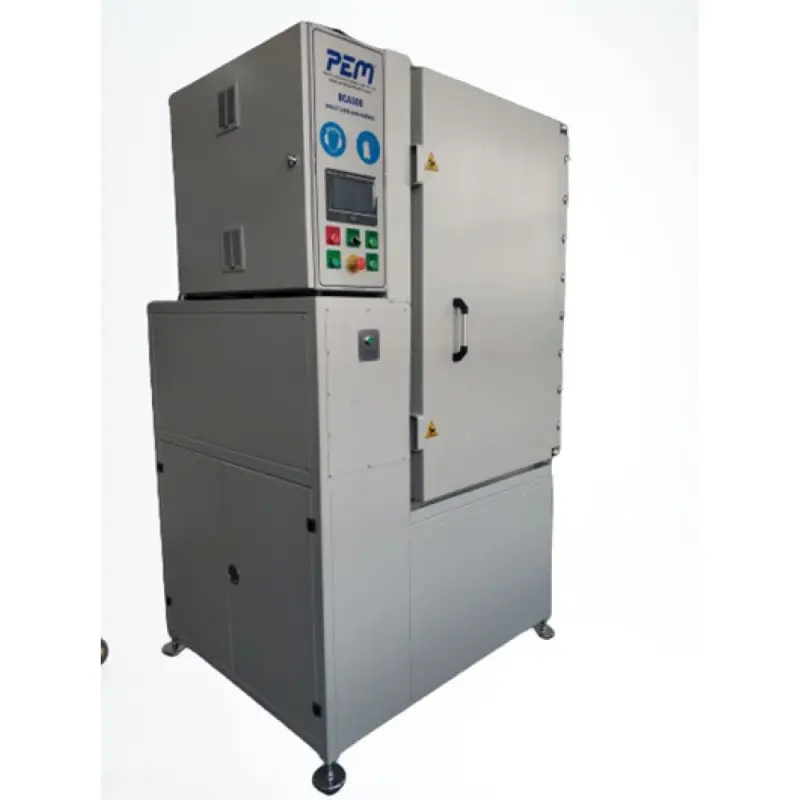
A rubber part fresh out of the mould may look clean, yet its surface carries mould release residue, mould oil, flash dust and dirt picked up in handling. These residues make the part harder to bond, paint or assemble, and on silicone and rubber products they leave the surface dull or blotchy. Traditionally, washing, drying and polishing are done at three separate stations, often by hand. The YKC series of rubber washing, drying and polishing machines combines all three operations in a single basket inside a single cabinet.
Three operations, one cycle
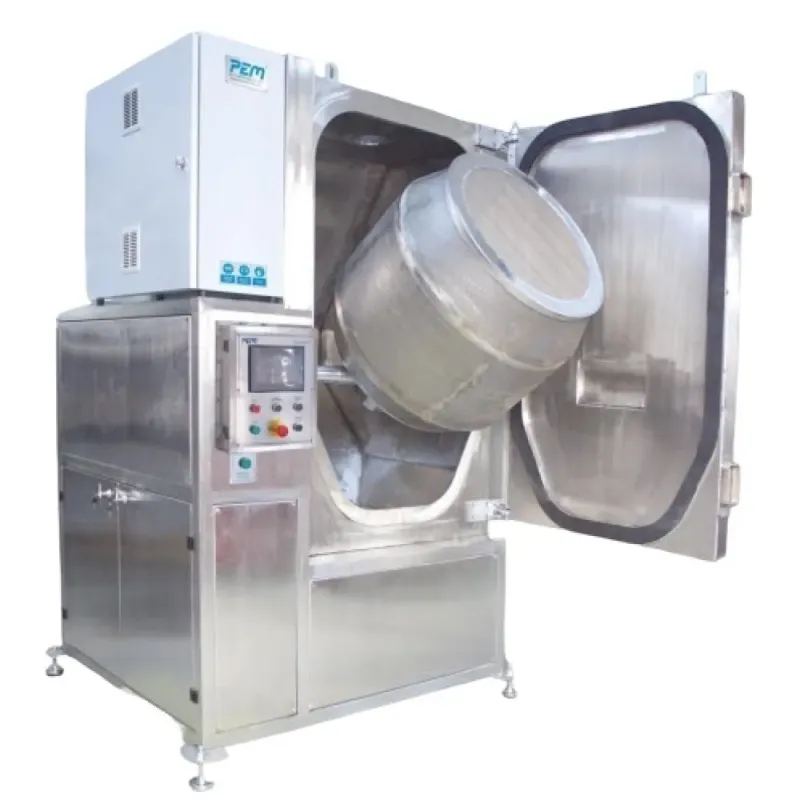
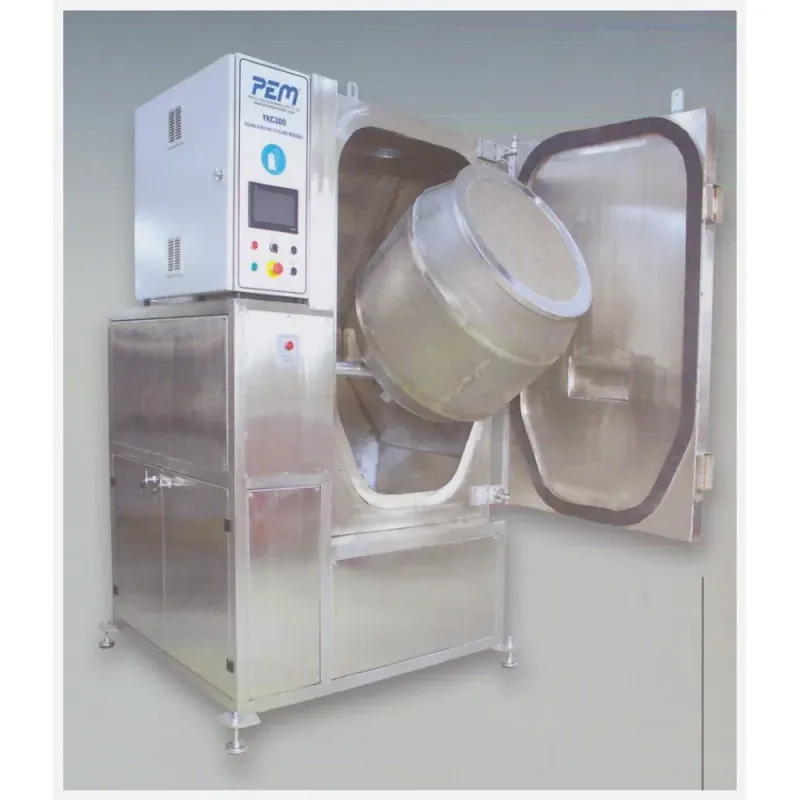
The basic idea of the machine is that the parts stay in the same rotating basket throughout the process. The operator loads the basket once, selects the recipe and, at the end of the cycle, takes out parts that are washed, dried and polished. Carrying parts between stations, letting them wait and reloading them all disappear.
1. Washing
The basket rotates in warm water dosed with detergent or a surface cleaner. The rotation keeps the parts tumbling so that every surface comes into contact with the liquid. Mould release, oil and dust separate from the part surface and pass into the water. Washing temperature and time are stored as a recipe according to the type of contamination and the elastomer.
2. Rinsing
Detergent residue would prevent the polish from adhering, so the parts are rinsed with clean water. Where necessary a two-stage rinse keeps the final water clean.
3. Hot-air drying
Once the water has been drained, the basket keeps turning while heated air is fed into the cabinet. Rotation flings the water off the parts and the hot air evaporates the remaining moisture. Air temperature is limited according to the heat resistance of the elastomer; silicone parts tolerate high temperatures, whereas some rubber compounds call for a gentler setting.
4. Silicone polish
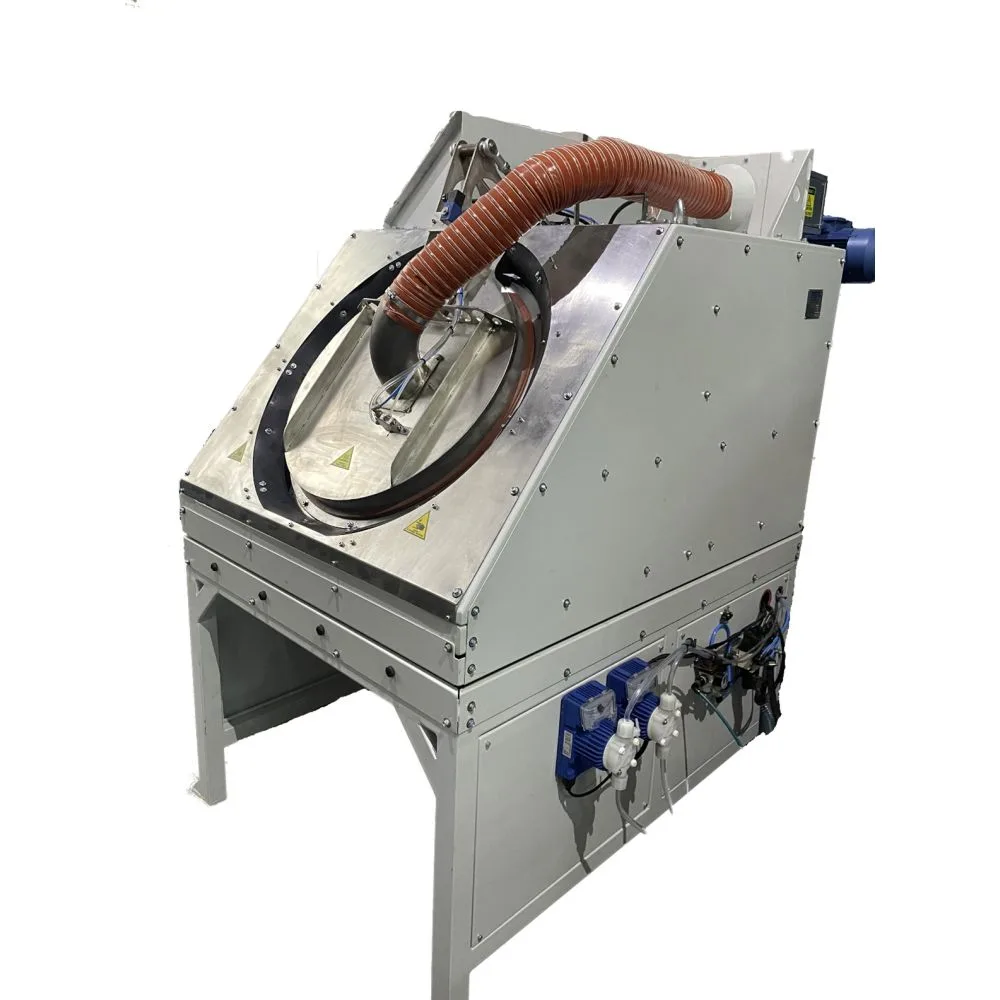
A metered quantity of silicone polish is applied to the dry parts by a dosing pump. The rotation of the basket spreads the polish evenly over every part. The polish gives the parts a glossy, slippery surface, reduces friction during assembly and prevents parts from sticking together in packaging. Setting the quantity on the pump keeps consumption under control and ensures consistency from part to part.
Water and chemical consumption
With manual washing under running water, consumption cannot be controlled. In the machine, the wash water is filled to a level that covers the basket and recirculated throughout the cycle. Depending on the recipe, the same water can serve several batches and is renewed when contamination builds up. Because detergent and polish are delivered by dosing pumps, the same quantity is used in every batch, and excess chemicals do not end up in the waste water.
Why pH control matters
The pH of the wash water affects both cleaning efficiency and the surface of the part. Water that is too alkaline or too acidic can cause dulling or swelling on some elastomers. Detergent dosing and the water renewal interval are set so that the pH stays within the range defined in the recipe. Regular measurement protects both product quality and the service life of the internal surfaces of the machine.
Material choice: AISI 304 and AISI 316
Every section of the machine that touches liquid, meaning the basket, tank, pipework and pump bodies, is made of stainless steel. For standard applications AISI 304 is sufficient and works without problems with detergents and silicone polish. Where cleaners containing chlorinated compounds are used, or where the machine operates in a salty environment, AISI 316 is chosen for its higher corrosion resistance. Prestij Endüstri manufactures in both grades; the choice is made at the project stage according to the chemicals that will be used.
Choosing the capacity
The YKC series is offered in three basket sizes:
| Model | Basket volume | Typical use |
|---|---|---|
| YKC140 | 140 L | Small parts, low to medium volumes |
| YKC200 | 200 L | Mid-scale series production |
| YKC300 | 300 L | High-volume lines and larger parts |
Basket volume determines how many parts can be processed in one batch. To select the right model, daily output, part size and the total duration of one cycle are considered together. Overfilling the basket stops the parts from moving enough, so cleaning and polishing become uneven; choosing a volume that matches the batches actually run is therefore more important than buying the largest model.
Which parts benefit?
- O-rings, gaskets, seals and other sealing elements
- Silicone kitchenware and baby products
- Automotive bellows, mounts and bushings
- Technical rubber parts for the electrical and home appliance industries
The fine dust left on parts after deflashing is removed completely in the washing stage, which is why YKC machines are usually placed directly after CDM cryogenic deflashing machines.
Conclusion
Bringing washing, drying and polishing together in one machine reduces labour, makes water and chemical consumption measurable and delivers the same surface quality in every batch. Prestij Endüstri builds the YKC series at its plant in Ikitelli, Istanbul, and provides project-based support on stainless steel selection, dosing systems and recipe development.