Post-moulding line planning for rubber and silicone producers
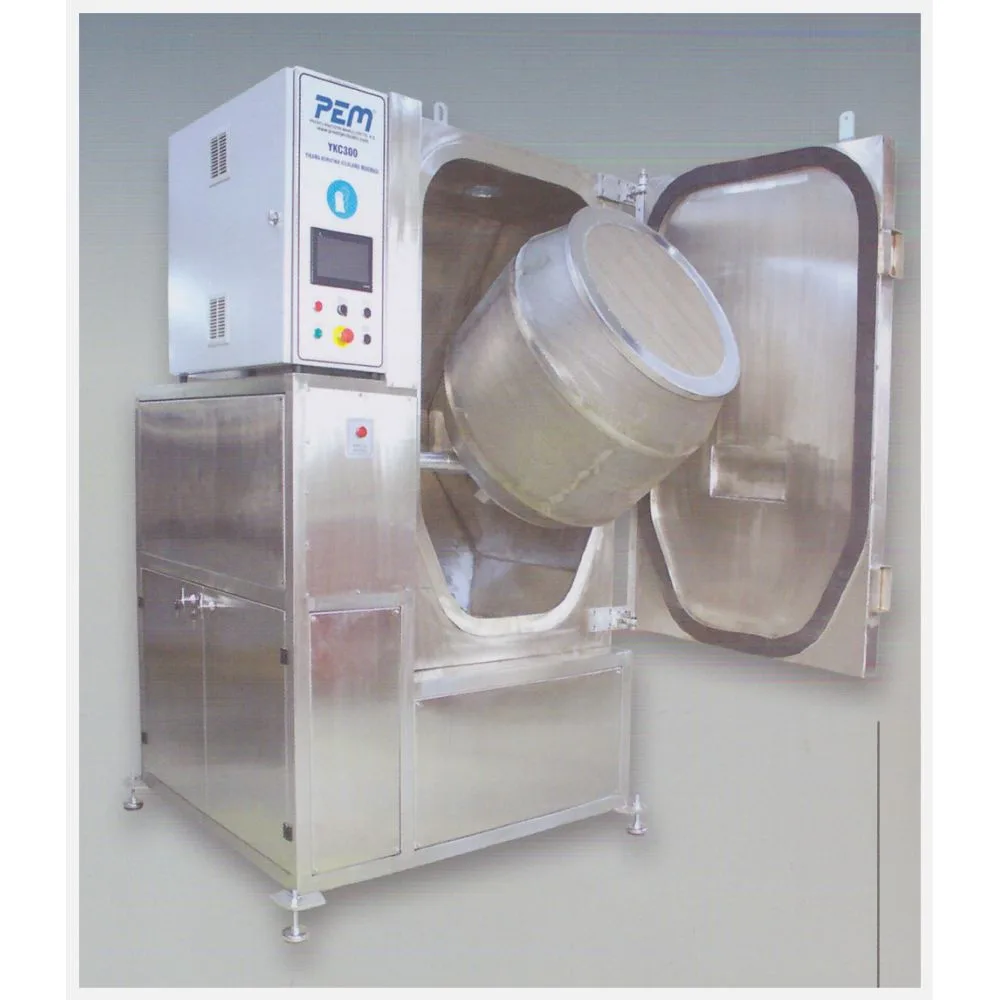
A part leaving the mould passes through deflashing, washing and polishing, drying and, where required, coating. This article looks at capacity balance between machines, layout, and how lifting and automatic drying systems improve ergonomics.
In rubber and silicone part production, the moulding press usually sits at the centre of the investment; yet a part leaving the mould has to pass through several more operations before it is ready for the customer. Each of those operations means another machine, another operator and another holding area. Planning the post-moulding line as a whole determines both capacity and labour cost. This article follows the typical route of a part from the mould and sets out what to consider when planning that route.
The route of a part
The great majority of elastomer parts follow this sequence after moulding:
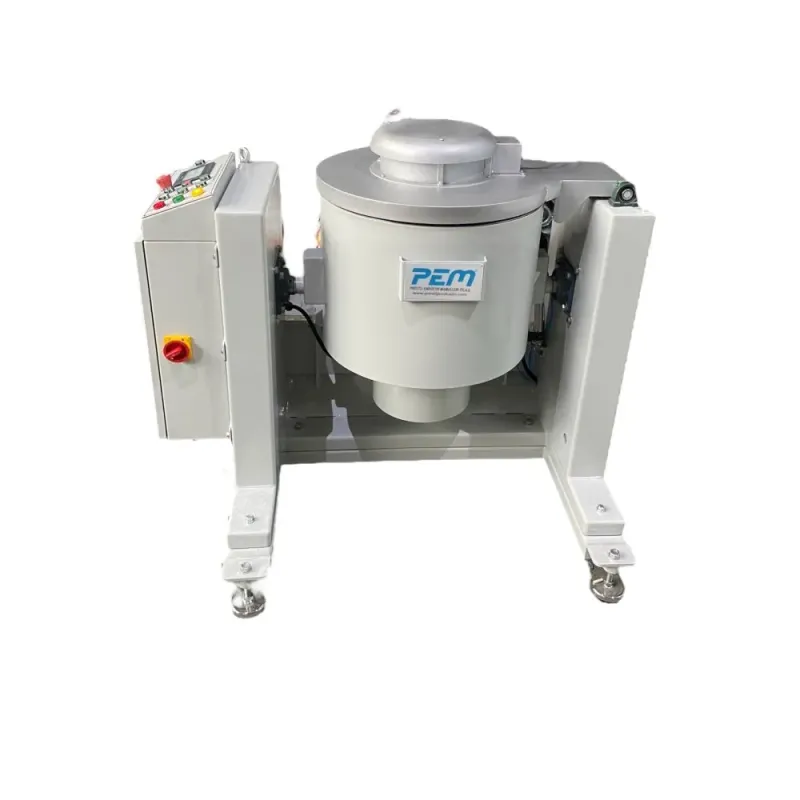
- Deflashing: The thin excess along the mould parting line is embrittled with liquid nitrogen and removed in a cryogenic deflashing machine. This step determines the dimensional and functional quality of the part.
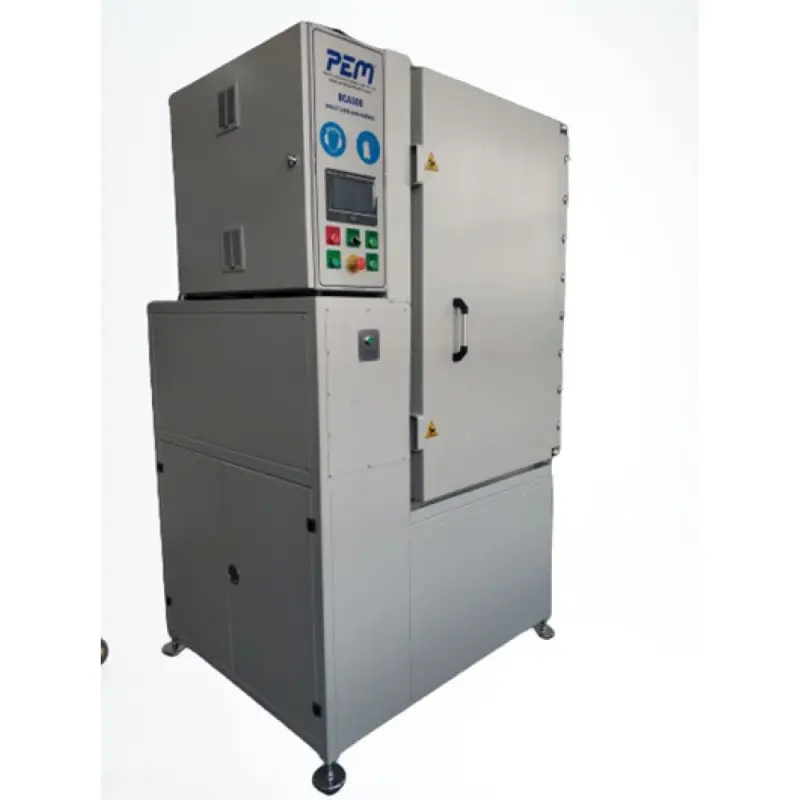
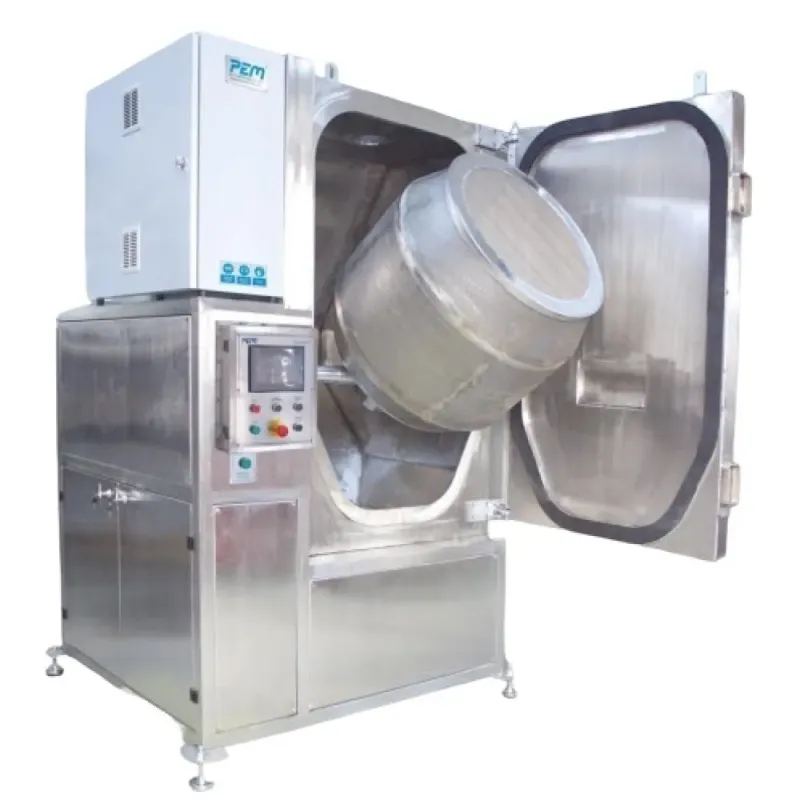
- Washing and polishing: Flash dust, mould release and oil residues are washed off and a silicone polish is applied. The polish is needed for ease of assembly and to stop parts sticking together.
- Drying: After washing, the parts are dried with hot air. In machines that combine washing, drying and polishing this step is part of the same cycle; with separate washing systems an independent dryer is required.
- Coating (where required): Parts that need a coloured finish or marking are coated in bulk in a drum coating machine.
- Inspection and packing: Parts that pass visual or automated inspection are counted and packed.
Not every product goes through all of these steps. Coating applies only to certain products, and some silicone parts are not polished. Line planning should begin with a clear table of which product group passes through which steps.
Balancing capacity
Each machine on the line has its own batch size and cycle time. A cryogenic deflashing machine processes a batch in a given time, while the basket of the washing machine has a different volume and a different cycle. Unless these differences are balanced, parts pile up in front of one machine while another stands idle.
The balance is established in these steps:
- An hourly target output is defined for each product group.
- For each machine, the number of parts per batch and the cycle time (including loading and unloading) are measured; from these the hourly capacity follows.
- The machine with the lowest hourly capacity is the bottleneck; it sets the real output of the line.
- The bottleneck is relieved either by a model with larger capacity or by a second machine in parallel; alternatively, the machine upstream is run with smaller batches to shrink the intermediate stock.
In practice deflashing is usually the step with the longest cycle, because cooling time depends on the mass of the parts. Washing and drying capacity is therefore chosen to match the output of deflashing, while coating capacity is chosen only for the share of products that are coated.
Layout and material flow
The physical order of the machines should match the direction of flow; backtracking adds both handling time and confusion. Placing the liquid nitrogen tank close to the deflashing machine, the washing machine near the water supply and drain, and the coating machine near the exhaust outlet all reduce installation cost. The space between machines should be wide enough for the crates that carry a full batch.
Ergonomics: lifting and automatic drying
The heaviest task for an operator on the post-moulding line is taking full baskets and drums out of one machine and loading them into the next. A full basket can be too heavy to carry safely by hand; manual lifting is both a safety risk and a drain on productivity over a shift. Two auxiliary systems come into play here:
- Tilting lift system (DYS): Raises a full basket or crate to the loading height of the machine and tilts it to empty. The operator simply hooks the basket onto the system and gives the command. It removes the physical load, especially when charging washing and deflashing machines.
- Automatic drying system (OKS): Moves parts from washing to drying and dries them without operator intervention. The wait between the washing outlet and the dryer disappears; because parts do not sit wet, the risk of staining and recontamination falls.
Used together, these two systems allow one operator to run several machines. Labour cost falls, and the attention of the operator shifts from loading and unloading to quality control and recipe tracking.
Recipes and traceability
Every machine on the line has its own recipe: temperature, turbine speed and time for deflashing; temperature, detergent and polish dosing for washing; number of coats and drying time for coating. Linking recipes to the product code and calling them up under the same code on every machine reduces the margin for error at product changeovers. On Prestij Endüstri machines, recipes are stored on the control panel; our background in industrial automation allows us to plan this integration at line level.
Local manufacture, spare parts and service
The machines on a post-moulding line run many cycles a day and have wearing parts: media, screens, filters, dosing pump diaphragms, heating elements. On an imported machine these parts can take weeks to arrive, and the line stands still in the meantime. With local manufacture, spare parts come from stock, the service team can reach the site quickly and recipe issues can often be resolved over the phone. Prestij Endüstri manufactures the complete range of CDM, YKC, DK, PEM, BCA, OKS and DYS machines at its facility in the Ikitelli Organised Industrial Zone in Istanbul, and works alongside its customers on batch size and cycle time calculations during line planning.
Conclusion
A post-moulding line is planned as a whole, not as a set of individual machines. Once the route of the part is clear, capacity is balanced, the layout follows the direction of flow, and lifting and automatic drying systems take care of ergonomics. A well-planned line delivers higher output and more consistent quality with the same number of operators.