What to look for when choosing a drum coating machine
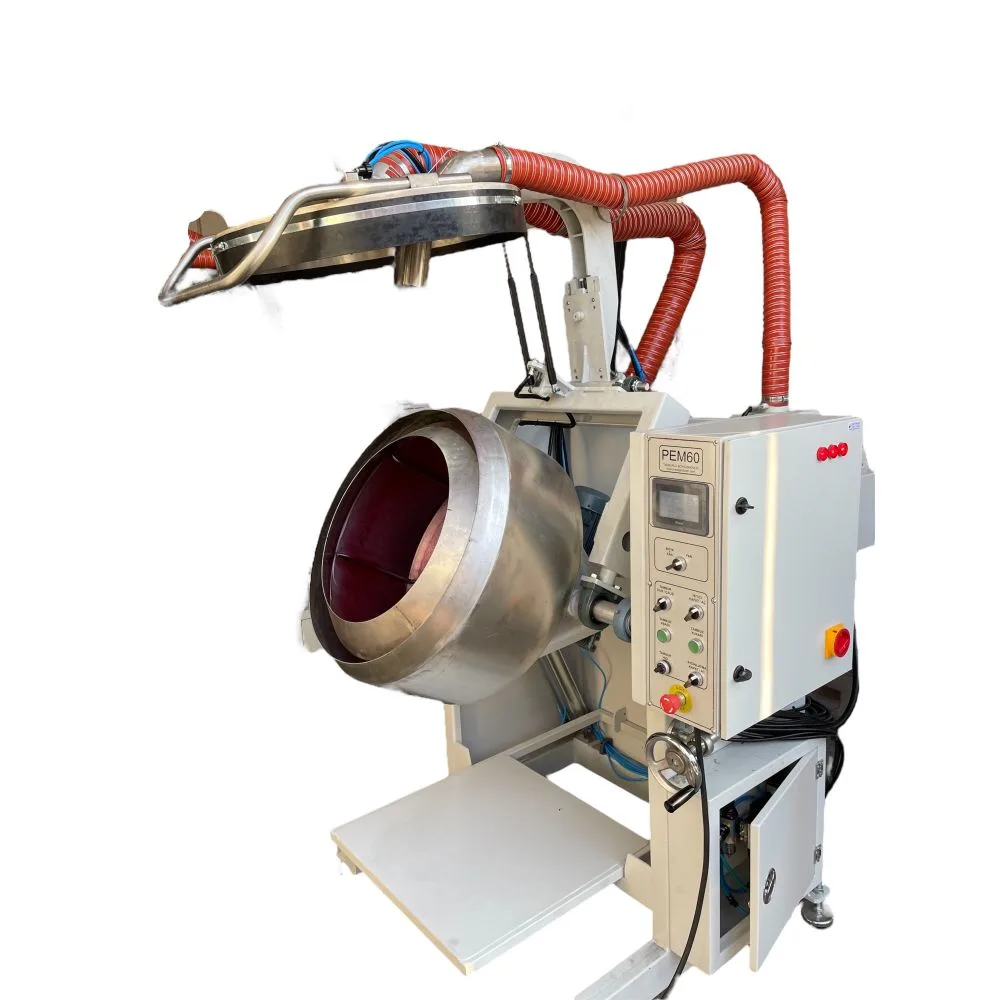
To coat small parts such as buckles, accessories and fasteners uniformly, drum volume, angle, heating, exhaust filtration, discharge type and paint supply must be weighed together when choosing a drum coating machine. We also summarise the differences between PEM57, PEM60, PEM70 and PEM80.
Painting small parts such as buckles, belt accessories, buttons, rivets, screws and clips one at a time is simply not practical. Hanging them on racks takes labour, small parts get lost in a spray booth, and the result varies from one piece to the next. Drum coating machines solve this by tumbling the parts in a rotating drum while the paint is applied to the whole batch at once. Not every drum machine suits every job, however; choosing the right one means weighing several basic parameters together.
How drum coating works
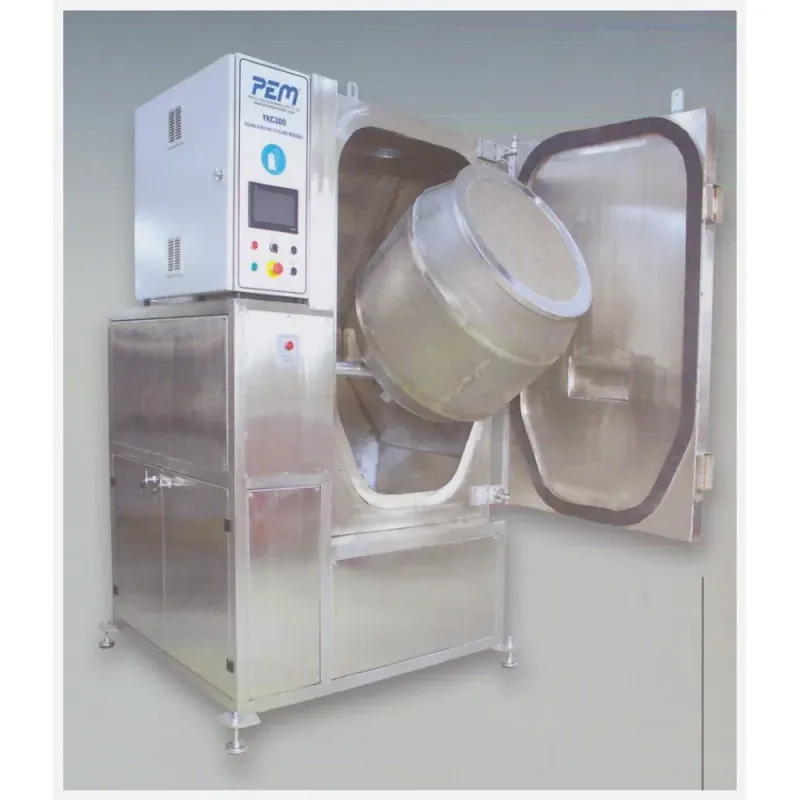
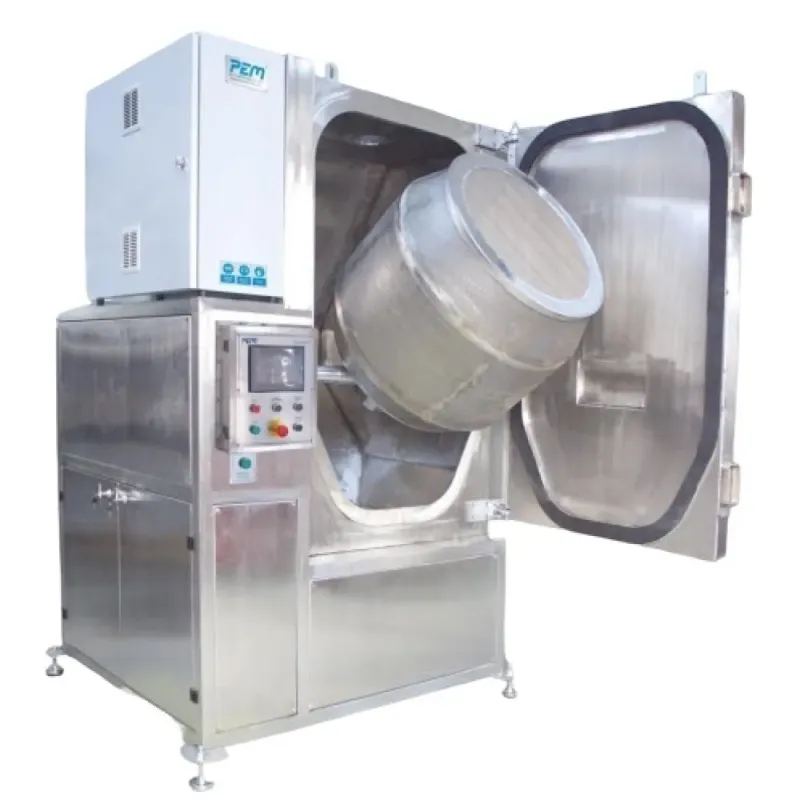
Parts are loaded into an inclined drum. As the drum rotates, the parts continuously change position so that every surface comes to the top in turn. Paint sprayed through the mouth of the drum spreads over the parts, and the rubbing of the parts against each other distributes it into a thin film. Heated air dries each coat as it is applied, so several coats can be built up without the parts sticking together. An exhaust system removes solvent vapour and paint mist from the working area.
Parameters to evaluate
1. Drum diameter and volume
The total volume of the drum and its loading volume are two different things. Only part of the drum is filled so that the parts can roll freely; the remaining space is their working room. The relationship is clearly visible in the PEM series from Prestij Endüstri:
| Model | Drum diameter | Drum volume | Loading volume |
|---|---|---|---|
| PEM57 | 570 mm | 100 L | 10 L |
| PEM60 | 570 mm | 90 L | 12 L |
| PEM70 | 850 mm | 160 L | 40 L |
| PEM80 (twin drum) | 800 / 570 mm | 140 / 100 L | Two independent drums |
Loading volume determines how many parts can be coated in a single batch. The required loading volume follows from the target output per shift and the duration of one cycle. A small drum needs many cycles for large batches; an oversized drum runs inefficiently with few parts, and the parts may not mix enough.
2. Drum angle
The inclination of the drum directly governs how the parts tumble. On PEM machines the angle can generally be set between 10° and 45°. A shallow angle keeps the parts deeper in the drum and rubbing intensively against each other, which suits light, flat parts. A steep angle brings the parts closer to the mouth of the drum, exposing them more to the spray and the hot air. An adjustable angle is an important flexibility for workshops that coat several part types on the same machine.
3. Heating
Hot air is fed into the drum to dry between coats. Heating power should be chosen according to the mass of the parts and the type of paint. Metal parts absorb and release heat quickly; with plastic parts the temperature must stay below the deformation limit of the material. Gradual and accurate temperature control is decisive for repeatable results, especially on plastic buckles and accessories.
4. Exhaust and filtration
Solvent vapour and paint mist generated during coating must be removed, both for the health of operators and for the quality of the finish. Exhaust fan capacity should be proportional to drum volume, and the filter class should match the particle structure of the paint used. The PEM series is fitted as standard with an EN779 class F5 filter, which captures most of the paint dust and protects both the room air and the fan. Filters that are easy to replace keep daily maintenance short.
5. Discharge: automatic or manual?
At the end of the cycle the parts have to come out of the drum. With manual discharge the operator tilts the drum and tips the parts into a crate; this is adequate for low-volume workshops with frequent product changes. With automatic discharge the drum tilts under programme control and the parts fall onto a conveyor or into a crate; this option reduces dependence on the operator in series production and shortens the cycle. The choice depends on the number of batches per day and the level of automation on the line.
6. Paint supply
Paint reaches the spray gun from a pressure pot or a pump. A supply system matched to the viscosity of the paint has a direct effect on the uniformity of the coat. In multi-colour production, the time a colour change takes depends on how easily the supply line can be cleaned. Being able to store spray time, pause and drying time as a recipe ensures that the same product comes out the same way in every batch.
General differences between the models
PEM57 and PEM60 share a similar drum diameter and compact capacity; they suit mid-scale production of small accessories and fasteners. PEM70, with its larger drum diameter and noticeably higher loading volume, is aimed at series production lines. PEM80 has two separate drums that allow two different products or colours to be processed at the same time, a practical answer for plants that want to cut colour-change losses.
Questions to ask before deciding
- How many parts per day will be coated, and what is their average size?
- Are the parts metal or plastic, and is there a temperature limit?
- How many colours are in use, and how often does the colour change?
- Where do the parts go after coating: a conveyor, a crate or a curing oven?
- Is there an adequate exhaust outlet and ventilation on site?
The answers to these questions settle every choice from drum volume to discharge type. Prestij Endüstri prefers to run trial cycles with sample parts to determine the right model and to support recipe development after installation; local manufacture also secures the continuity of spare parts and service.