Tilting dryers in electroplating and coating plants
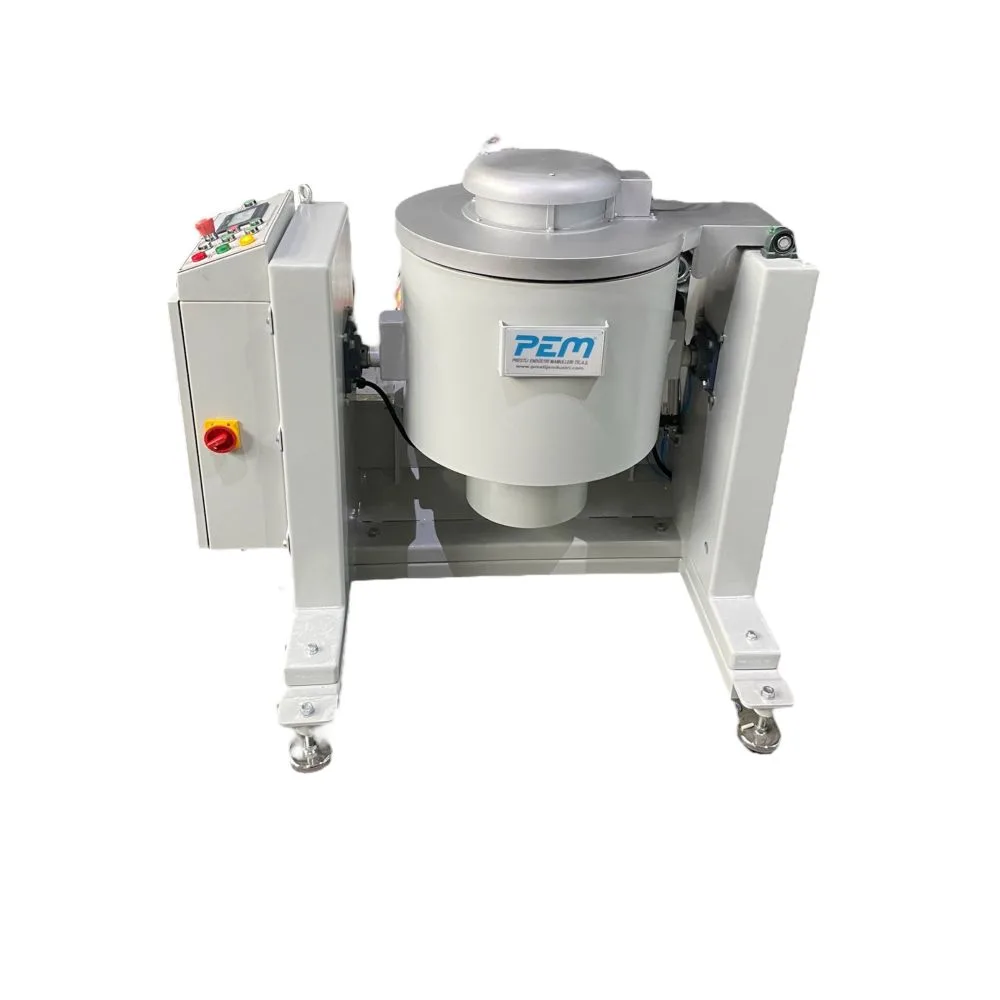
Small parts such as buckles, nuts and bolts leaving the plating bath stain and corrode unless dried quickly. We explain how tilting dryers work, how to choose the perforated basket and heating power, the difference between manual and semi-automatic tilting, and the operating sequence.
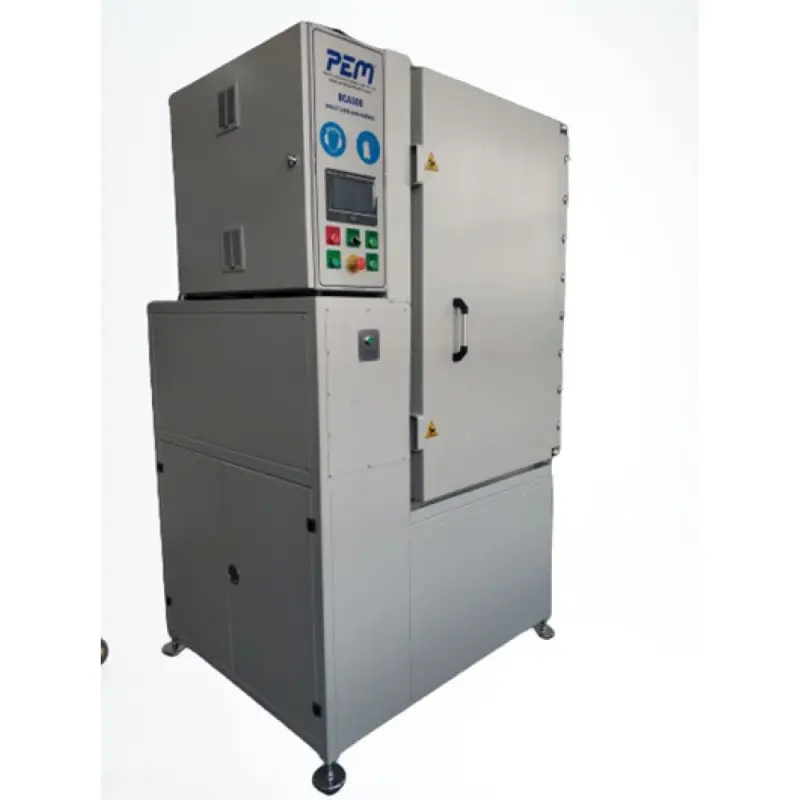
In electroplating and coating plants, parts leaving the plating bath are wet after their final rinse. If buckles, nuts, bolts, washers, rivets and similar small parts are left in this state, water spots, run marks and the first signs of corrosion appear on the surface; on zinc and nickel finishes the appearance suffers particularly. Drying is therefore the unseen but decisive last step of the plating line. Tilting dryers (the DK series) are designed to dry small parts handled in bulk quickly and uniformly.
The difficulty of drying bulk parts
When small parts are dried in a heap, moisture struggles to leave the surface. Water is trapped where parts touch each other, so the outside of the heap looks dry while the inside stays wet. Thread grooves, bores and buckle hinges hold water by capillary action. A static oven cannot solve this; the parts have to keep moving while they dry.
The tilting dryer principle
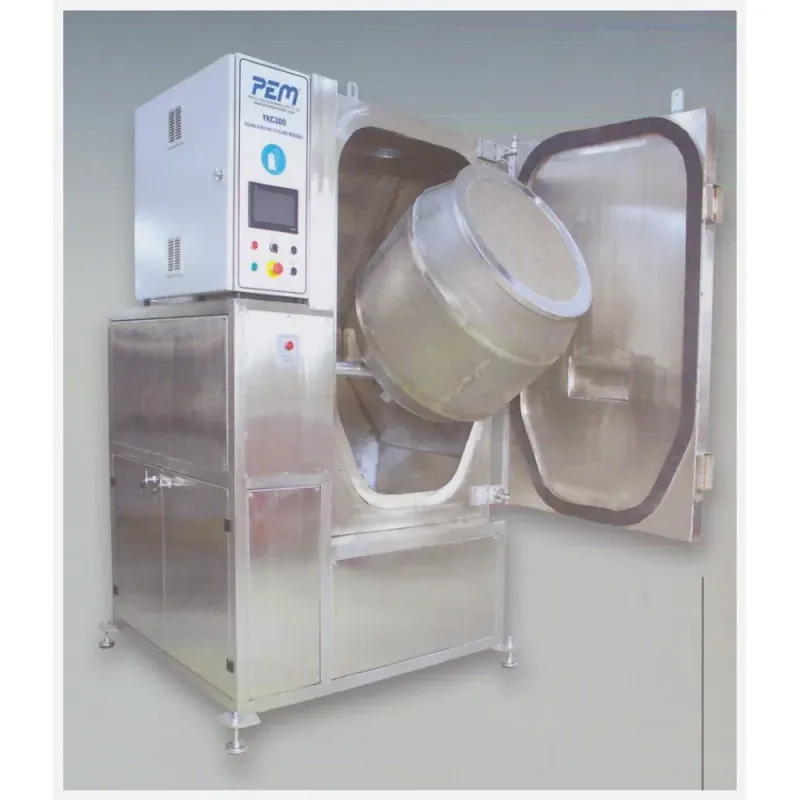
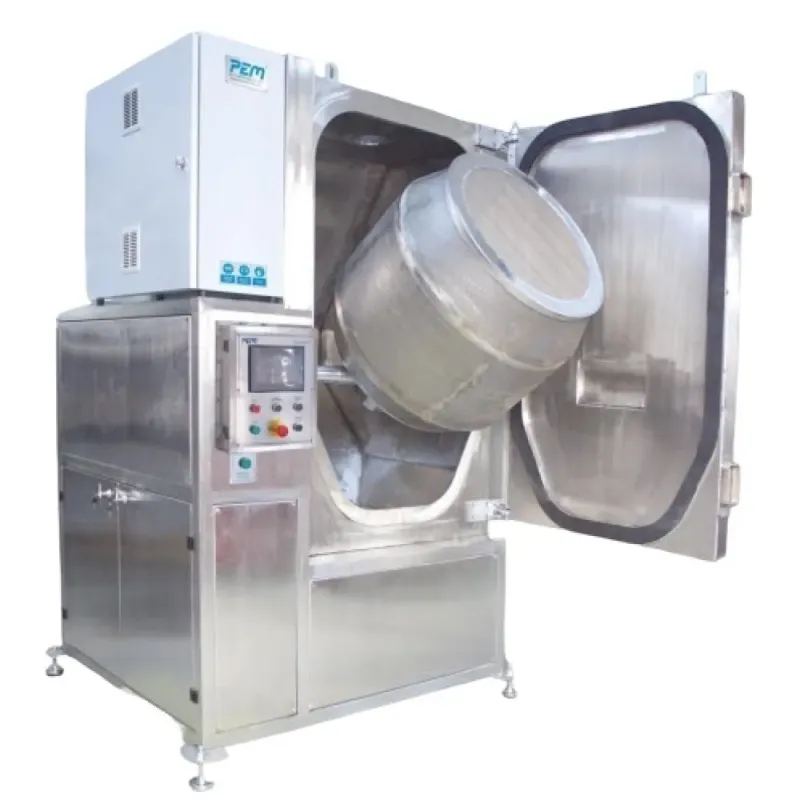
In the machine, the parts are loaded into a perforated stainless steel basket. The basket rotates during drying and keeps the parts tumbling, while heated air is blown in from beneath. Because the rotation continually changes the position of the parts, water is removed both by centrifugal action and by the hot air stream. At the end of the cycle the basket tilts and the dry parts are discharged into a crate or onto a conveyor.
The perforated basket
The basket is made of AISI 304 stainless steel and withstands both heat and residues of plating chemicals. The hole diameter is Ø2 mm as standard; this size lets hot air pass freely while preventing small nuts and washers from escaping. For even smaller parts the hole size is defined per project.
Heating power
Heating is by electric elements. The power required is selected according to the loading capacity of the basket, the mass of the parts and the target cycle time. Thick, heavy parts store more heat, and heating power is increased accordingly. Temperature is set on the control panel and a limit is defined for each type of finish; on passivated parts, for example, more moderate values are used because excessive heat can affect the appearance of the coating.
Basket speed
The rotation speed is set so that the parts roll inside the basket without striking each other hard enough to scratch the finish. Low speed suits buckles with delicate surfaces, while robust parts such as nuts and bolts can take a higher speed. A user-adjustable speed makes it possible to process different product groups on the same machine.
Manual and semi-automatic tilting
The DK series is offered with two discharge arrangements:
- Manual tilting: When the cycle ends, the operator tilts the basket with a lever and empties the parts. The design is simple with few components to maintain, and it is sufficient for low to medium volumes.
- Semi-automatic tilting: The basket is tilted by a motor or pneumatic drive at the press of a button. The physical load on the operator falls, large baskets are emptied safely and the cycle is shorter. This is recommended for high-volume lines running continuously through the shift.
When choosing, consider the number of batches per day, the weight of the loaded basket and how much the operator is shared with other tasks. Tilting heavy baskets by hand becomes a safety and ergonomics problem over time.
Operating sequence
- Parts leaving the plating and final rinse baths are left to drain; excess water runs out through the basket holes.
- The basket is placed in the machine, or the parts are transferred into the basket fitted to it.
- Temperature, speed and time are selected on the control panel; for frequently run products a stored recipe is called up.
- The cycle starts: the basket rotates, hot air is blown through, and moisture is removed by the exhaust.
- When the time is up, heating switches off and a short cooling rotation follows.
- The basket tilts, the parts are collected in a crate and the next batch is loaded.
The most critical point in this sequence is balancing drying capacity with the speed of the plating line. When drying becomes the bottleneck, wet parts are left waiting and the risk of staining rises. Basket volume and cycle time should therefore be chosen according to the hourly output of the plating line.
Maintenance and service life
The stainless basket and housing give a long service life in the damp, chemical-laden atmosphere of a plating shop. The basket holes should be checked regularly for blockage, the heating elements and fan kept clean, and the tilting mechanism lubricated. On a locally built machine all of these components are available from stock, so unplanned stoppages stay short.
Conclusion
A tilting dryer completes the plating process by drying small parts uniformly and without stains. Manual or semi-automatic tilting, basket speed and heating power are selected to suit the volume of the plant. Prestij Endüstri configures the DK series to match the capacity of the plating line and provides service and spare parts support from its facility in Istanbul.